

History of Aquariology
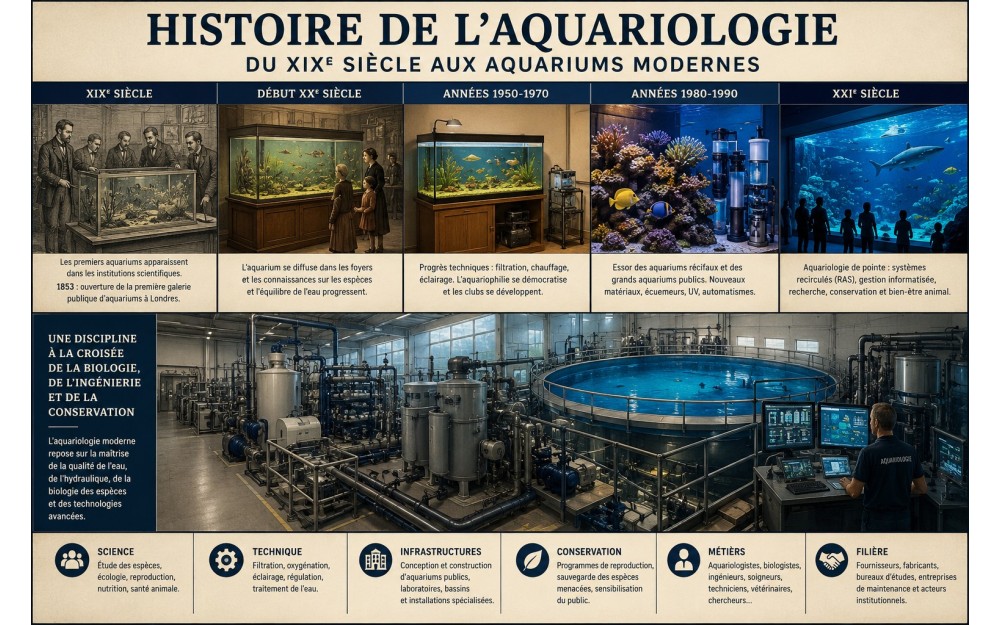
Aquariology is the discipline that encompasses the scientific, technical, and practical knowledge related to the design, operation, and maintenance of artificial aquatic environments intended to house living organisms. Although it is now associated with both home aquariums and large public aquariums, as well as research laboratories and aquaculture facilities, its history is relatively recent.
Emerging in the mid-19th century, aquariology has evolved through advances in biology, chemistry, hydraulics, lighting, filtration, and, more recently, automation. In just over 170 years, it has progressed from a field of natural history observation to a multidisciplinary discipline requiring advanced expertise in engineering, species conservation, and aquatic ecosystem management.
The Origins: Observing Aquatic Life
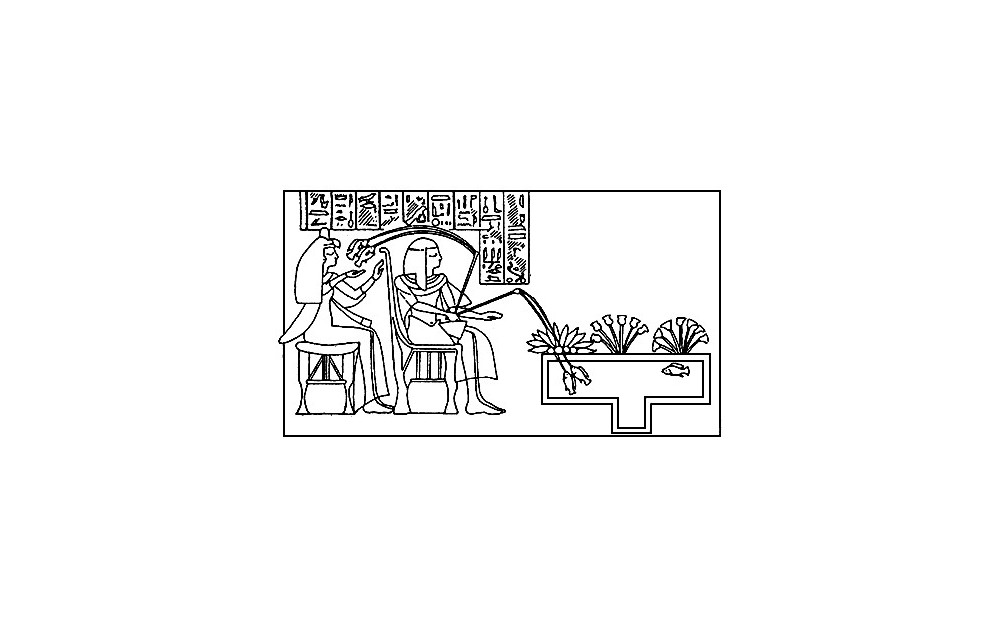
Since Antiquity, civilizations have kept fish in ponds and holding tanks, primarily for food production or ornamental purposes. The Romans already built piscinae supplied with seawater, while the Chinese developed the breeding of goldfish from the Asian carp at a very early stage.
However, these installations cannot be regarded as the direct ancestors of modern aquariums. Their purpose was neither the scientific observation of aquatic organisms nor the long-term recreation of a balanced aquatic ecosystem.
It was not until the 19th century, with the rise of the natural sciences, that the first true aquariums appeared.
The 19th Century: The Birth of Modern Aquariology
At the beginning of the 1800s, naturalists sought to keep aquatic organisms alive in order to study their behavior, physiology, and reproduction. Early attempts, however, were limited by a poor understanding of gas exchange, water quality, and biological balance.
A major breakthrough came with the work of the British chemist Robert Warington, who demonstrated that a stable balance could be achieved between fish, aquatic plants, and microorganisms. This understanding of biological interactions became the foundation of future balanced aquariums.
In 1853, the Zoological Society of London opened the world's first major public gallery entirely dedicated to aquariums. This event marked a decisive milestone in the history of the discipline.
The following year, the British naturalist Philip Henry Gosse published The Aquarium: An Unveiling of the Wonders of the Deep Sea. This work popularized the word "aquarium" and helped introduce this new practice to the general public. It is still regarded today as one of the founding texts of modern aquariology.
The Late 19th Century: The Aquarium Becomes a Scientific and Decorative Object
From the 1860s onward, aquariums gradually became popular in European homes.
Advances in glassmaking made it possible to manufacture stronger and more reliable tanks, while expanding international trade facilitated the importation of exotic fish from Asia, Africa, and South America.
The first specialized manufacturers emerged, offering aquariums, aeration systems, thermometers, and a wide range of accessories. Publications devoted to aquariology became increasingly common, gradually helping to establish a community of knowledgeable enthusiasts.
During this period, knowledge still relied largely on empirical observation. The biological mechanisms responsible for maintaining aquarium stability were not yet fully understood.
The First Half of the 20th Century: Scientific Foundations Become Stronger
Throughout the 20th century, advances in microbiology and water chemistry greatly improved the understanding of aquatic ecosystems.
Researchers demonstrated the essential role of bacteria in converting ammonia into nitrites and then into nitrates. This process, known as the biological nitrogen cycle, remains one of the fundamental principles of aquariology today.
At the same time, aquarium equipment continued to evolve. Aeration systems became more efficient, the first mechanical filters were introduced, and electric heaters made it possible to maintain tropical species under suitable conditions.
To be continued...