


The role of biofilm in an MBBR biofilter
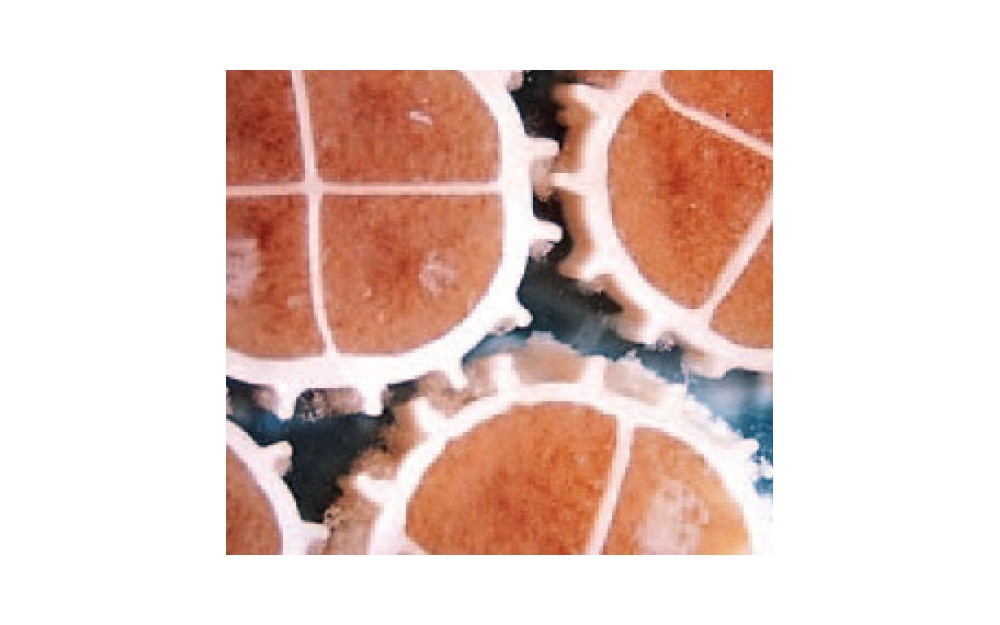
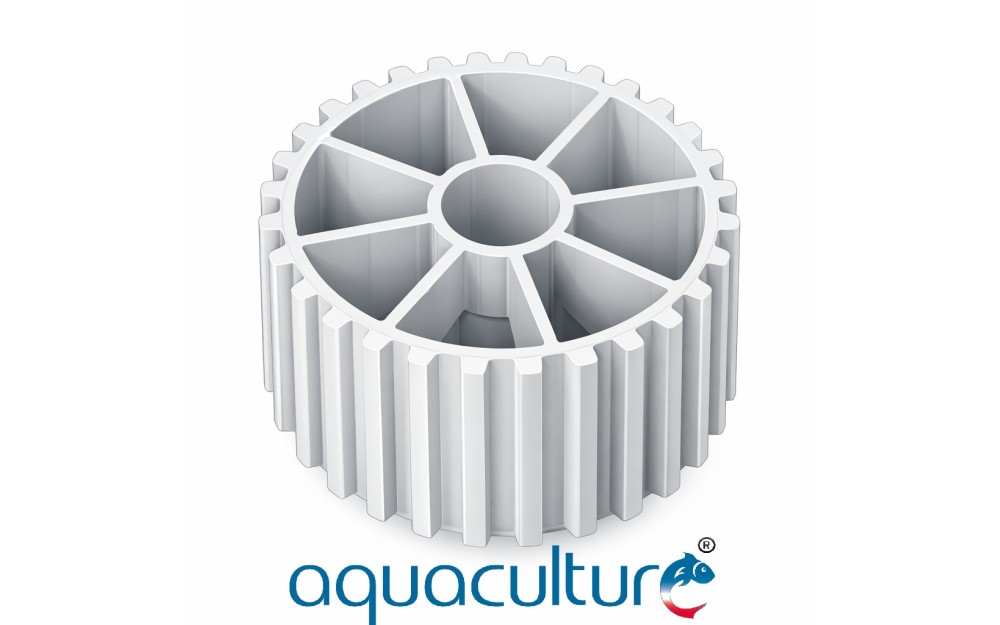
In a Moving Bed Biofilm Reactor (MBBR), biological carriers only provide the physical support for water treatment. The actual purification process is carried out by the biofilm, a complex community of bacteria, archaea, protozoa, and other microorganisms that gradually colonize the surface of the biological media.
In a Recirculating Aquaculture System (RAS), fish continuously release ammonia (NH₃/NH₄⁺), mainly through their gills. Additional nitrogen is produced through the decomposition of uneaten feed, fecal matter, and other organic compounds present in the system. Without biological treatment, these compounds rapidly accumulate and become toxic to cultured organisms.
The primary role of the biofilm is to transform these nitrogen compounds through the nitrification process. This biological reaction occurs in two successive steps. First, ammonia-oxidizing bacteria convert ammonium into nitrites. Then, nitrite-oxidizing bacteria transform nitrites into nitrates, which are much less toxic to fish and easier to remove through water exchange or denitrification processes.
However, a high-performance biofilter does not depend solely on the presence of nitrifying bacteria. The biofilm is a true ecosystem in which microorganisms with complementary functions coexist. Heterotrophic bacteria contribute to the degradation of dissolved organic matter, certain archaea are also involved in the nitrogen cycle, while protozoa naturally regulate bacterial populations. These biological interactions contribute to the stability and efficiency of the biofilter.
The three-dimensional organization of the biofilm also plays an essential role. The extracellular polymeric substances (EPS) matrix forms a porous structure crossed by microchannels that allow the circulation of water, oxygen, and nutrients throughout the different layers of the biofilm. This architecture promotes the simultaneous development of several bacterial populations and enables the biofilter to maintain high biological activity despite variations in organic loading.
The performance of an MBBR biofilter therefore depends on a set of parameters that go far beyond the simple volume of installed carriers. Reactor hydraulics, media filling ratio, mixing intensity, dissolved oxygen concentration, pH, alkalinity, temperature, and organic loading directly influence biofilm growth and nitrification performance.
The natural renewal of the biofilm is also a fundamental element of its operation. Due to collisions between biological carriers and hydraulic shear forces, the oldest surface layers gradually detach. This phenomenon, often incorrectly considered as a loss of biomass, is actually essential. It maintains a young, active, and sufficiently permeable biofilm, allowing efficient exchanges of oxygen and nutrients. The deeper layers remain attached to the biological carriers and provide the foundation for the development of new bacterial populations.
For an aquaculture engineering company, the design of an MBBR biofilter is therefore not limited to calculating the specific surface area of biological media. It requires a comprehensive approach integrating carrier characteristics, nitrification kinetics, reactor hydraulics, oxygen requirements, fish ammonia production, recirculation objectives, and operational constraints. A properly designed biofilter must provide favorable conditions for the development of a stable biofilm capable of adapting to variations in fish biomass while maintaining consistent water quality.
This global approach explains why two biofilters using identical biological carriers can achieve very different performances. The quality of the media is an important factor, but it cannot compensate for poor hydraulic design, insufficient oxygen supply, or inadequate management of organic loading.
The biofilm represents the true biological core of MBBR biofilters. It is responsible for nitrification, contributes to organic matter degradation, and ensures the biological stability of RAS systems. The plastic carriers are ultimately only the habitat where this complex microbial community develops.
The design of an efficient biofilter therefore relies on a deep understanding of the biological mechanisms governing biofilm formation, growth, and renewal. For engineering companies, designers, and operators, this approach makes it possible to optimize system sizing, improve production safety, and reduce operating costs.
Not all MBBR biological carriers are equivalent. Understanding these differences is essential to optimizing biofilter performance and designing increasingly efficient RAS systems.