


Aquaculture et biodiversity
For a long time, aquaculture was perceived as an activity likely to compete with natural ecosystems. Today, scientific knowledge and technological advances demonstrate, on the contrary, that well-designed aquaculture can become a true contributor to biodiversity conservation.
Producing more while preserving ecosystems
Faced with global population growth and the decline of wild fishery resources, aquaculture represents an essential solution to meet the growing demand for aquatic proteins.
However, its development can only be considered by reducing its environmental and carbon footprints. Modern projects now favour an integrated approach in which water management, effluent control, energy efficiency and biological resources are key elements of the design process.
Biodiversity starts with water quality
Aquatic biodiversity directly depends on the quality of natural environments.
In an aquaculture facility, the management of dissolved oxygen, carbon dioxide, ammonia, suspended solids and physicochemical parameters not only ensures fish welfare but also helps reduce impacts on the receiving environment.
Modern water treatment systems, biofilters, degassing columns, UV sterilizers, protein skimmers and recirculating aquaculture systems (RAS) now make it possible to significantly reduce water withdrawals and environmental discharges.
Recirculating Aquaculture Systems (RAS): an environmental revolution
Recirculating systems use up to 99% recycled water.
This technology makes it possible to:
- Significantly reduce water withdrawals from natural environments;
- Limit nitrogen and phosphorus discharges;
- Control health risks;
- Improve zootechnical performance;
- Produce closer to consumer markets, thereby reducing the carbon footprint associated with transport.
Thanks to these technologies, it is now possible to increase production while consuming fewer natural resources.
Restoring rather than exploiting
Aquaculture also contributes to numerous conservation programmes.
Many endangered species are now subject to controlled breeding programmes designed to support wild populations or reintroduce individuals into their original habitats.
Research centres, conservation facilities and some fish farms therefore play a major role in preserving the genetic heritage of many aquatic species.
Promoting functional biodiversity
Biodiversity is not limited to fish alone.
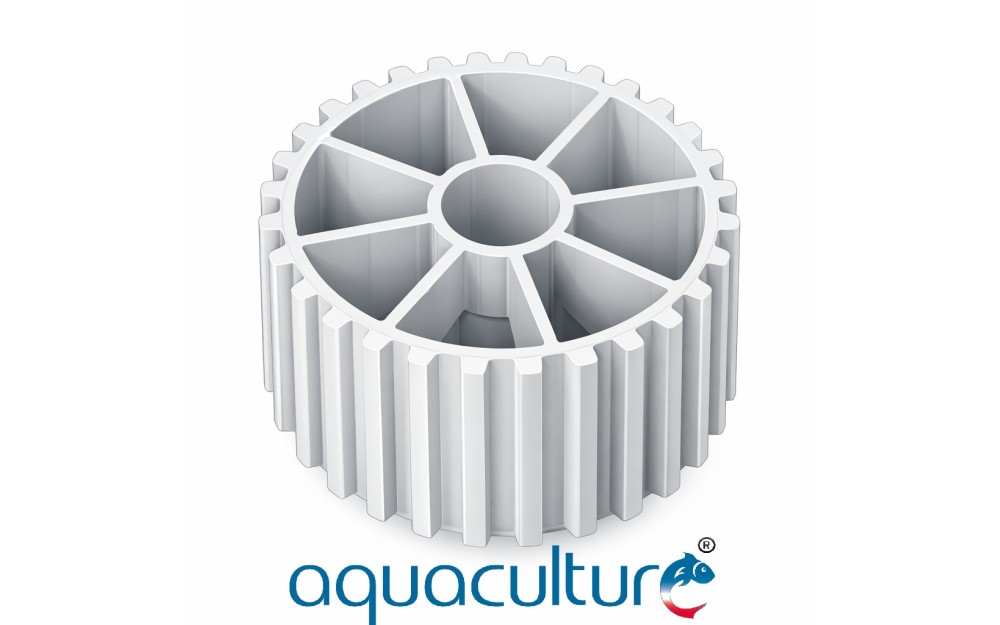
Microorganisms present in biofilters ensure the nitrification process essential to the operation of recirculating systems.
Microalgae contribute to oxygen production, nutrient recovery and provide an essential food resource for many farmed species.
Invertebrates, bacteria and all biological communities contribute to the proper functioning of artificial aquatic ecosystems.
A high-performance facility therefore relies as much on biological balance as on technical equipment.
Designing environmentally responsible facilities
Environmental integration begins during the design phase.
Hydraulic sizing, equipment selection, energy management, water recovery, sludge treatment and consumption optimisation all contribute to sustainably reducing the ecological impact of aquaculture facilities.
Each project must seek the best balance between technical performance, economic profitability and the preservation of natural resources.
Expertise serving sustainable aquaculture
For nearly forty years, CHF Aquaculture France has supported professionals, local authorities, research institutes and investors in the design of high-performance and environmentally responsible facilities.
Our approach combines hydraulic engineering, water treatment, energy efficiency, animal welfare and environmental impact management to develop responsible, innovative and sustainable aquaculture solutions.
Because producing fish is not only about mastering a technology, but also about preserving the ecosystems on which the future of the entire sector depends.