


L'ozone en aquaculture RAS et en aquariologie
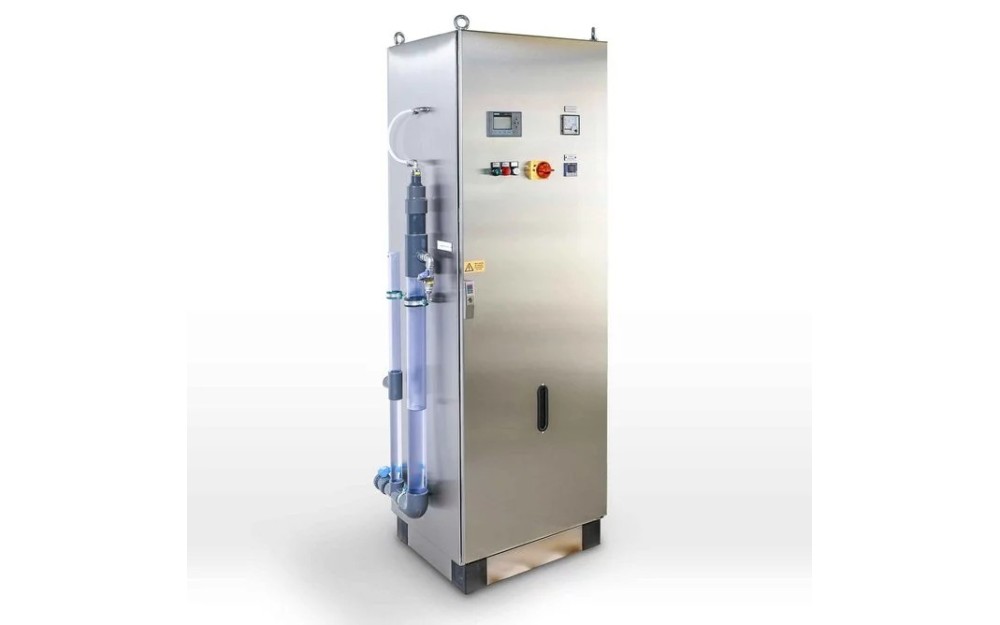
Controlling water quality is one of the major challenges facing intensive aquaculture facilities and aquariology systems.
In Recirculating Aquaculture Systems (RAS), as well as in public aquariums, aquaculture facilities and aquatic species display systems, water is continuously exposed to various pressures: the accumulation of organic matter, bacterial growth, the production of nitrogen compounds, the formation of fine particles and changes in its physicochemical properties.
Conventional water treatment equipment, particularly mechanical and biological filtration systems, handles a large proportion of these treatment requirements. However, certain forms of pollution, especially dissolved organic matter and colloidal particles, remain difficult to remove using traditional processes.
This is where ozone offers significant potential.
As a powerful oxidising agent, ozone can improve the physicochemical quality of water, reduce certain microbiological loads, promote the removal of colloidal matter and improve water clarity.
However, its use requires precise control of the injection process, contact time, ozone demand and the removal of residual oxidants.
The objective is therefore not simply to introduce ozone into a hydraulic circuit, but to design a genuine water treatment process that is fully integrated into the overall operation of the facility.
1. Understanding the Properties of Ozone
Ozone (O₃) is a molecule made up of three oxygen atoms. Naturally present in the atmosphere, it is particularly well known for its role in protecting the Earth against ultraviolet radiation.
In water treatment, ozone is artificially produced from oxygen or dry air, generally using a corona discharge generator.
Its main characteristic is its high oxidising power. It reacts rapidly with many substances present in water, including organic compounds, certain mineral compounds and the cellular structures of microorganisms.
Unlike some conventional disinfectants, ozone is unstable. It gradually decomposes to form oxygen, without leaving a persistent disinfectant residual in the water.
This characteristic is particularly interesting for aquaculture applications, where the prolonged presence of a disinfectant could compromise animal health and the biological balance of the installation.
However, two concepts must be distinguished:
-
The oxidising capacity of ozone, which refers to its ability to react with substances present in the water.
-
Its disinfecting action, which depends in particular on the actual dissolved ozone concentration, contact time and the type of microorganisms being targeted.
These two functions are related, but do not necessarily require the same operating conditions.
2. Why Use Ozone in a RAS Installation?
In a Recirculating Aquaculture System (RAS), water continuously circulates between the rearing tanks and the various water treatment units.
Conventional treatment generally relies on several complementary stages:
-
Removal of suspended solids through mechanical filtration.
-
Conversion of ammonium into nitrite and then nitrate through biological filtration.
-
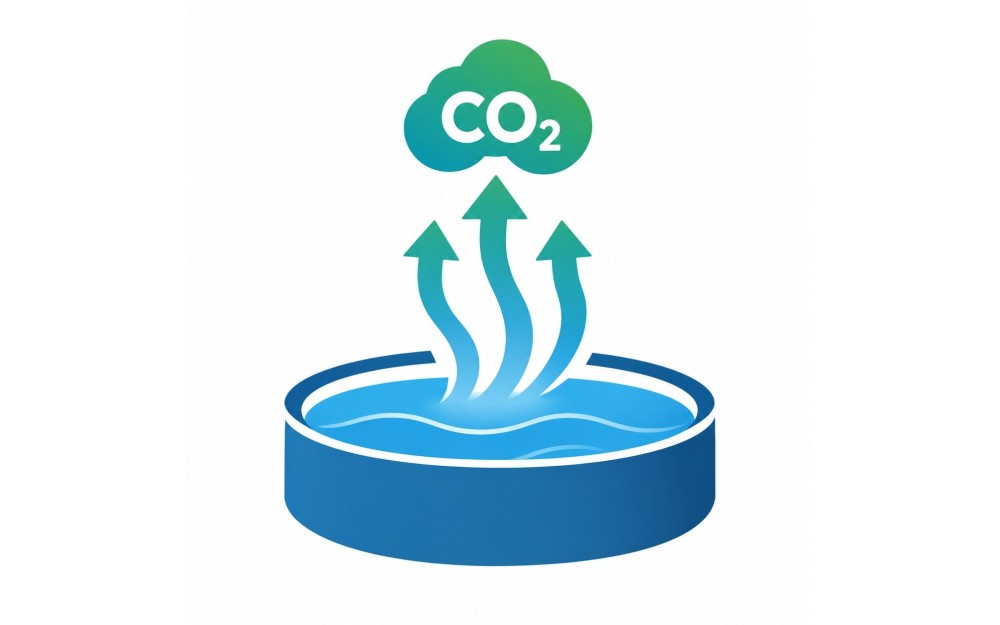
CO₂ removal through degassing.
-
Water reoxygenation.
-
Optional disinfection using ultraviolet radiation.
These systems perform the essential functions of water treatment. However, they do not always effectively remove all dissolved organic compounds and colloidal particles.
Over time, these substances can accumulate and contribute to a gradual deterioration in water quality.
Ozonation can help address several of these issues.
-
Oxidation of Dissolved Organic Matter
Fish continuously produce metabolic and organic waste. This is compounded by uneaten feed, faecal matter and compounds resulting from biological degradation.
Some of this pollution is removed through mechanical filtration. Another fraction remains in dissolved form.
Ozone reacts with certain organic compounds and modifies their molecular structure.
This oxidation process can lead to:
-
A reduction in certain fractions of dissolved organic carbon.
-
Reduced water colouration.
-
Improved water clarity.
-
The conversion of complex organic molecules into more readily biodegradable compounds.
-
A reduction in certain substances responsible for unpleasant odours and potentially associated with health problems.
However, it should be emphasised that ozonation is not a complete organic carbon removal process. It transforms some of the compounds present in the water, which must subsequently be removed through separation equipment or biological processes.
-
Improved Mechanical Filtration
One of the major benefits of ozone lies in its action on fine and colloidal particles.
Some very small particles remain suspended in the water and pass through conventional mechanical filtration equipment.
Ozone can modify the surface properties of these particles and promote their aggregation.
This phenomenon, known as microflocculation, results in the formation of larger particles that can be separated more easily.
This process is particularly beneficial when combined with:
-
Drum filters.
-
Sand or multimedia filters.
-
Flotation systems.
-
Protein skimmers.
-
Suspended solids separation equipment.
Combining ozonation with mechanical separation can therefore improve the overall efficiency of water treatment.
It is important to remember that ozone does not replace mechanical filtration. Instead, it can improve its performance by facilitating the removal of certain particle fractions that are otherwise difficult to capture.
-
Reduction of the Microbiological Load
Ozone has well-established disinfecting properties.
It acts primarily through the oxidation of cell membranes, proteins and various molecular structures essential to the functioning of microorganisms.
Its action can target:
-
Certain pathogenic bacteria.
-
Certain opportunistic bacteria.
-
Viruses.
-
Fungi.
-
Certain parasites and microscopic organisms.
However, disinfection efficiency depends on several parameters:
-
Dissolved ozone concentration.
-
Contact time.
-
Water temperature.
-
pH.
-
Organic load.
-
The type of microorganisms being targeted.
The presence of organic matter creates a significant ozone demand. Part of the oxidising agent is consumed before it can exert its disinfecting action on microorganisms.
This is why ozonation carried out downstream of effective mechanical separation generally achieves better performance.
It is also important to distinguish between reducing the bacterial load in the water and eliminating microorganisms present in biofilms or on equipment surfaces. Water ozonation does not guarantee the complete disinfection of an installation.
-
Improving the Visual Quality of Water
In aquariology installations, water clarity is an important criterion.
Water containing high levels of dissolved organic matter, fine particles or microorganisms may develop colouration or turbidity that is incompatible with the presentation requirements of aquatic animals.
Ozone helps improve these characteristics by acting simultaneously on several fractions of the pollution load.
In public aquariums, this improvement offers two main benefits:
-
It contributes to the visual quality of tanks and exhibition areas.
-
It helps maintain water quality and suitable living conditions for aquatic animals.
3. Ozone Applications in Aquariology
The use of ozone has historically been well established in large public aquariums, particularly for treating large volumes of seawater.
These facilities face specific challenges.
Aquarium tanks can contain several hundred or even several thousand cubic metres of water. Aquatic animals have widely varying sensitivities, and systems must maintain stable water quality despite significant organic and biological loads.
Ozone is used in particular to:
-
Improve water clarity.
-
Reduce dissolved organic matter.
-
Limit certain forms of microbial growth.
-
Improve protein skimmer efficiency.
-
Reduce unwanted water discoloration.
-
Contribute to maintaining water quality and sanitary conditions within recirculation systems.
The use of ozone in seawater requires particular care. Seawater naturally contains significant concentrations of bromide ions. Under the action of ozone, these ions can be converted into secondary oxidising compounds, particularly hypobromous acid and bromamines. These substances can be toxic to fish, invertebrates and other aquatic organisms. The issue therefore concerns not only the presence of residual ozone, but also the oxidants generated by chemical reactions in the water.
In marine facilities, treatment design must take into account:
-
Bromide concentration.
-
The organic load of the water.
-
The amount of ozone injected.
-
Contact time.
-
Residual oxidant concentration.
-
Neutralisation and monitoring systems.
The use of activated carbon can, in particular, help remove certain residual oxidants.
It is therefore essential to include a treatment safety stage before the water is returned to the aquarium tanks.
4. Designing an Ozonation System
The performance of an ozonation system depends as much on its hydraulic design as on the capacity of the ozone generator.
A complete installation generally consists of several items of equipment.
-
The ozone generator
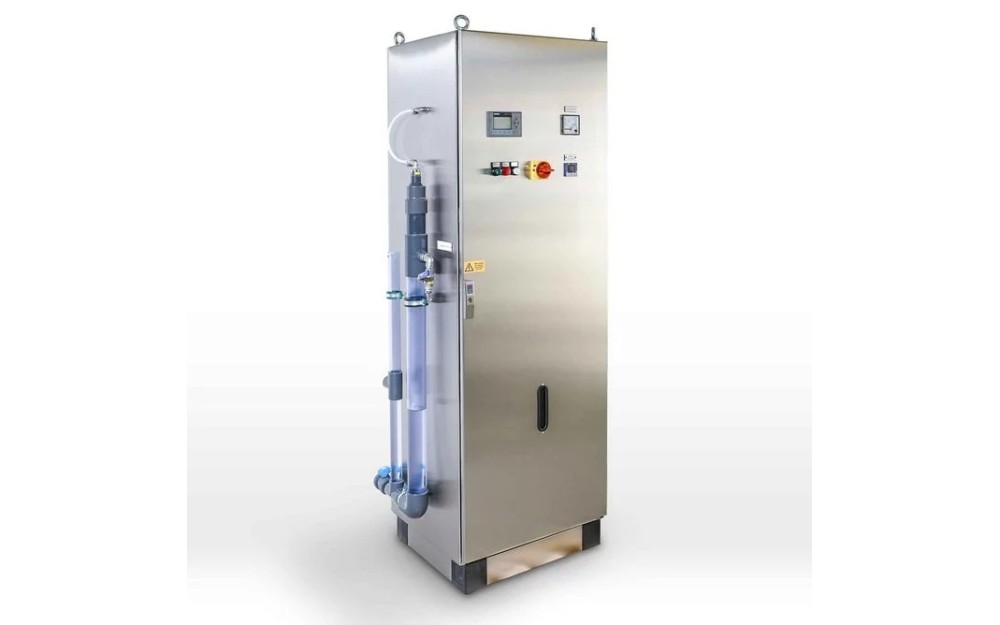
Ozone is produced on site because its instability makes it unsuitable for storage under conventional conditions. Industrial generators mainly operate using the corona discharge principle. Oxygen passes through an area subjected to a high-voltage electric field. A proportion of the oxygen molecules is converted into ozone.
Using concentrated oxygen or pure oxygen generally makes it possible to achieve higher ozone concentrations and better production efficiency than when using ambient air.
Generator sizing must take into account:
-
Gas flow rate.
-
Ozone concentration produced.
-
Hourly mass production (g/h).
-
Operating pressure.
-
Quality and dryness of the feed gas.
-
Continuous or intermittent operating conditions.
The capacity of a generator should not be determined solely on the basis of aquarium volume. It must be calculated according to the actual ozone demand of the treatment process.
-
The injection system
Ozone must be efficiently transferred from the gas phase into the water.
Several technologies can be used:
-
Venturi injectors.
-
Fine-bubble diffusers.
-
Contact columns.
-
Static mixers.
-
Pressurised injection systems.
The objective is to maximise the gas-water exchange surface in order to improve transfer efficiency. Poor dissolution results in reduced performance and increases the amount of ozone present in the residual gas.
-
The contact reactor
The contact reactor is a key component of the treatment process.
It ensures that the water remains in contact with ozone for a defined period of time.
Its design and sizing depend in particular on:
-
Hydraulic flow rate.
-
Injected ozone concentration.
-
Instantaneous ozone demand.
-
Required contact time.
-
The hydraulic characteristics of the reactor.
It is important to distinguish between theoretical hydraulic retention time and effective contact time.
Hydraulic short-circuiting, uneven flow distribution and incomplete gas transfer can significantly reduce treatment performance.
-
Degassing and residual ozone destruction
At the reactor outlet, the water may still contain dissolved ozone, while the gas phase may contain residual ozone.
It is therefore necessary to provide:
-
An appropriate degassing system.
-
A system for destroying ozone present in residual gases.
-
Neutralisation of residual oxidants in the water, where necessary.
Residual gas destruction can be achieved using a suitable catalytic or thermal ozone destructor.
For water treatment, solutions may include degassing, activated carbon filtration and, depending on the system configuration, other neutralisation processes.
The objective is to ensure that the water returned to the aquarium tanks does not contain residual concentrations that could be harmful to aquatic animals.
5. Where Should Ozonation Be Positioned in an RAS Circuit?
The positioning of the ozonation system is a determining factor. Several configurations are possible in an RAS facility.
Ozonation downstream of mechanical filtration is generally preferred. The water has already undergone the removal of suspended solids. Ozone demand is therefore reduced, allowing the treatment to focus more effectively on dissolved organic matter and fine particles.
The water is then directed through a contact reactor before proceeding to the next treatment stages.
Ozonation on a secondary loop involves treating a fraction of the total flow in an independent loop.
This configuration offers several advantages:
-
Control over the treated flow rate.
-
Ability to adjust ozone production according to requirements.
-
Independence from the main flow rate.
-
Ease of maintenance.
-
Better control of contact and degassing conditions.
The secondary loop can incorporate an injection system, a contact reactor, a degassing unit and a safety system for the treated water.
This solution is particularly attractive for existing installations requiring improved water quality without major modifications to the main circuit.
Ozone can also be used upstream of the biofilter. This configuration can help reduce certain organic loads and improve the operating conditions of biological filtration. However, residual ozone must be carefully controlled to avoid affecting nitrifying bacteria.
The system design must therefore ensure complete ozone consumption or include a neutralisation stage before the water enters the biofilter.
In some installations, ozone is introduced downstream of biological filtration, on the return circuit to the tanks. This arrangement makes it possible, in particular, to treat the water before it is returned to the fish-rearing tanks.
However, it involves one fundamental requirement: no residual ozone or harmful secondary oxidants must reach the aquatic animals.
A contact stage, degassing and monitoring are therefore essential.
6. Ozonation Control: Oxidation-Reduction Potential (ORP)
One of the most widely used parameters for controlling an ozonation system is the oxidation-reduction potential, also known as ORP (Oxidation Reduction Potential).
Expressed in millivolts (mV), it indicates the overall tendency of a solution to accept or donate electrons. Ozone injection causes the redox potential to increase.
This measurement therefore provides an indirect indication of changes in the water's oxidising capacity.
A control system can use an ORP probe to regulate the operation of the ozone generator and adjust its output according to treatment requirements.
However, it is important to remember that ORP does not directly measure the concentration of dissolved ozone.
Its value also depends on:
-
pH.
-
Temperature.
-
The chemical composition of the water.
-
The presence of other oxidising or reducing substances.
-
Organic load.
There is therefore no universal ORP value applicable to all aquaculture and aquariology installations.
The setpoint must be determined according to water characteristics, treatment objectives and the sensitivity of the cultured organisms.
In demanding installations, ORP measurements can be supplemented with direct measurements of dissolved ozone, residual oxidants and other water quality indicators.
Probe positioning is also important: it must be installed at a location representative of the treatment process, without being directly exposed to an injection zone that could distort the control signal.
7. Risks and Essential Precautions
Ozone is a particularly effective technology, but its use cannot be considered without a thorough risk assessment.
-
Toxicity to aquatic organisms
Ozone is toxic to fish and invertebrates when they are exposed to excessive residual concentrations. It can cause gill damage, tissue alterations and mortality. The presence of secondary oxidants also represents a risk, particularly in seawater.
The system design must therefore incorporate a safety mechanism independent of the generator's standard control system.
-
Protection of biological filtration
Nitrifying bacteria are sensitive to oxidising agents.
Excessive exposure can impair their activity and compromise the biological balance of the RAS. Residual concentrations must therefore be monitored before the water enters the biofilter whenever it is positioned downstream of the ozonation stage.
-
Personnel safety
Ozone gas is highly toxic when inhaled. Installations must be equipped with appropriate safety devices:
-
Ozone detectors in technical rooms.
-
Adequate ventilation.
-
Residual gas destruction systems.
-
Automatic generator shutdown in the event of a malfunction.
-
Leak detection and monitoring.
-
Ozone-compatible materials
The technical room and equipment must be designed to prevent any accidental exposure.
8. How to Size an Ozonation System?
System sizing is an essential stage of any project.
A common mistake is to determine the ozone generator capacity solely on the basis of the volume of water contained in the tanks.
This approach is insufficient.
Ozone demand depends primarily on the pollutant load to be treated and the objectives to be achieved. In an RAS facility, the required ozone quantity can, in particular, be related to the amount of feed distributed daily.
As an indication, some technical recommendations use indicative ranges of 10 to 15 grams of ozone per kilogram of feed distributed to contribute to the oxidation of organic matter.
This value provides a starting point for an engineering study, rather than a universal sizing rule.
Requirements can vary considerably depending on:
-
The species being farmed.
-
The feeding rate.
-
Feed quality.
-
Mechanical filtration efficiency.
-
Water exchange rate.
-
Dissolved organic load.
-
Temperature.
-
Salinity.
-
The microbiological treatment objectives.
A sizing study should therefore ideally include:
-
Characterisation of water quality.
-
Estimation of ozone demand.
-
Definition of the flow rate to be treated.
-
Calculation of the required ozone mass production.
-
Gas-to-water transfer assessment.
-
Contact reactor sizing.
-
Definition of degassing and neutralisation equipment.
-
Control and safety strategy.
Preliminary tests on representative water samples can also help determine actual ozone consumption more accurately and assess expected treatment performance.
9. Ozone and UV: Two Complementary Technologies
Ozone and ultraviolet radiation are sometimes considered competing solutions for water disinfection.
In reality, their mechanisms of action are different, and combining them can offer significant benefits.
Ozone works through chemical oxidation. It can modify organic compounds, reduce certain microbiological loads and improve water clarity.
UV treatment uses ultraviolet radiation, mainly at 254 nm for conventional disinfection equipment. It inactivates microorganisms by damaging their genetic material.
Combining the two technologies makes it possible to achieve:
-
Improved physicochemical water quality through ozonation.
-
Reduction of microbiological loads through oxidation.
-
Additional microorganism inactivation through UV treatment.
UV treatment must be sized according to the UV transmittance of the water, the flow rate and the actual UV dose delivered.
Clearer water, with higher UV transmittance, can improve the operating conditions of the UV reactor.
However, it is important not to confuse technological complementarity with a guarantee of complete disinfection. Each piece of equipment must be sized according to the required microbiological objectives.
10. Ozone: A Performance-Enhancing Tool for Tomorrow's Aquaculture Facilities
The development of RAS technology is driving the search for increasingly efficient solutions to control water quality while reducing resource consumption.
In this context, ozone represents a particularly interesting tool.
It can act on pollutant fractions that are only partially removed by conventional treatment processes and helps improve overall treatment performance.
Its value lies not only in disinfection, but also in its ability to modify water quality and facilitate the operation of other treatment equipment.
However, its use must be part of an integrated approach incorporating mechanical filtration, biological filtration, degassing, oxygenation and UV disinfection.
Each installation has its own hydraulic and biological characteristics. There is therefore no standard ozonation solution that can be applied to every project.
Performance ultimately depends on the quality of the engineering study, equipment sizing, effective ozone transfer into the water and proper control of residual concentrations.