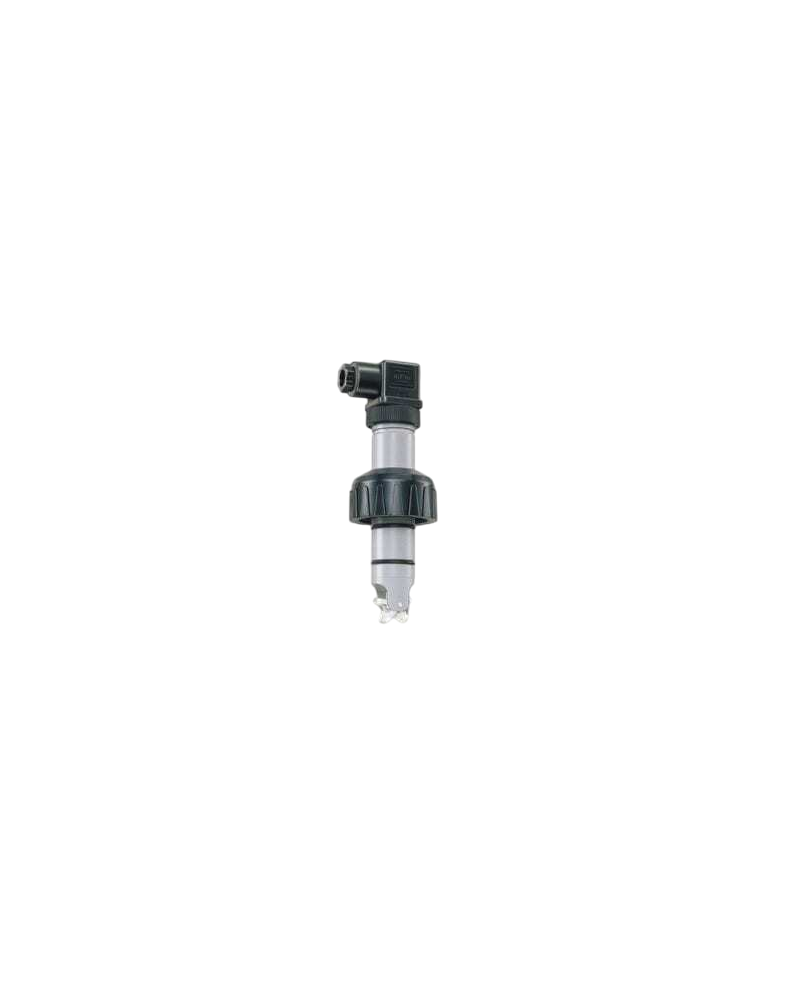


A paddle (or turbine / rotor) flow meter is a volumetric flow sensor that measures the flow rate of a liquid by inserting a wheel or rotor with blades into the stream. The fluid causes the paddle wheel to rotate, and this movement is converted into an electrical signal proportional to the flow rate.
It operates using a movable paddle (or vane) placed perpendicular to the flow. When the fluid passes, the force exerted by the liquid moves the paddle. This movement is then converted into a mechanical, electrical, or electronic signal proportional to the flow rate.
A paddle (or turbine / rotor) flow meter is a volumetric flow sensor that measures the flow rate of a liquid by inserting a wheel or rotor with blades into the stream. The fluid causes the paddle wheel to rotate, and this movement is converted into an electrical signal proportional to the flow rate.
It operates using a movable paddle (or vane) placed perpendicular to the flow. When the fluid passes, the force exerted by the liquid moves the paddle. This movement is then converted into a mechanical, electrical, or electronic signal proportional to the flow rate.
The paddle wheel (rotor) is placed in the liquid flow; the fluid pushes on the blades, causing the rotor to rotate.
A magnetic or Hall effect sensor detects each rotation or passage of the blades, generating a pulse (frequency) proportional to the fluid velocity.
The sensor’s electronics convert this frequency into a volumetric flow rate, often using a calibration factor (K-factor) specific to the pipe diameter or rotor geometry.
Depending on the model, the output can be pulses, frequency, 4–20 mA signal, or a combination of analog/digital outputs.
Advantages:
Relatively easy to install and integrate
Moderate cost compared to more complex technologies
Good compatibility with many clean liquids (without solid particles)
Various outputs (analog, pulse) for easy integration into automation systems
Available in compact or insertion versions to fit different pipe diameters
Limitations / constraints:
Not suitable for liquids containing solids, abrasive particles, or sludge, which can damage the rotor
Mechanical wear of moving parts (blades, shaft) may reduce accuracy over time
Sensitive to disturbed flow profiles (turbulence, undeveloped flow)
Requires regular calibration and maintenance
For very low flows or highly viscous fluids, the paddle wheel may not rotate properly

You might also like