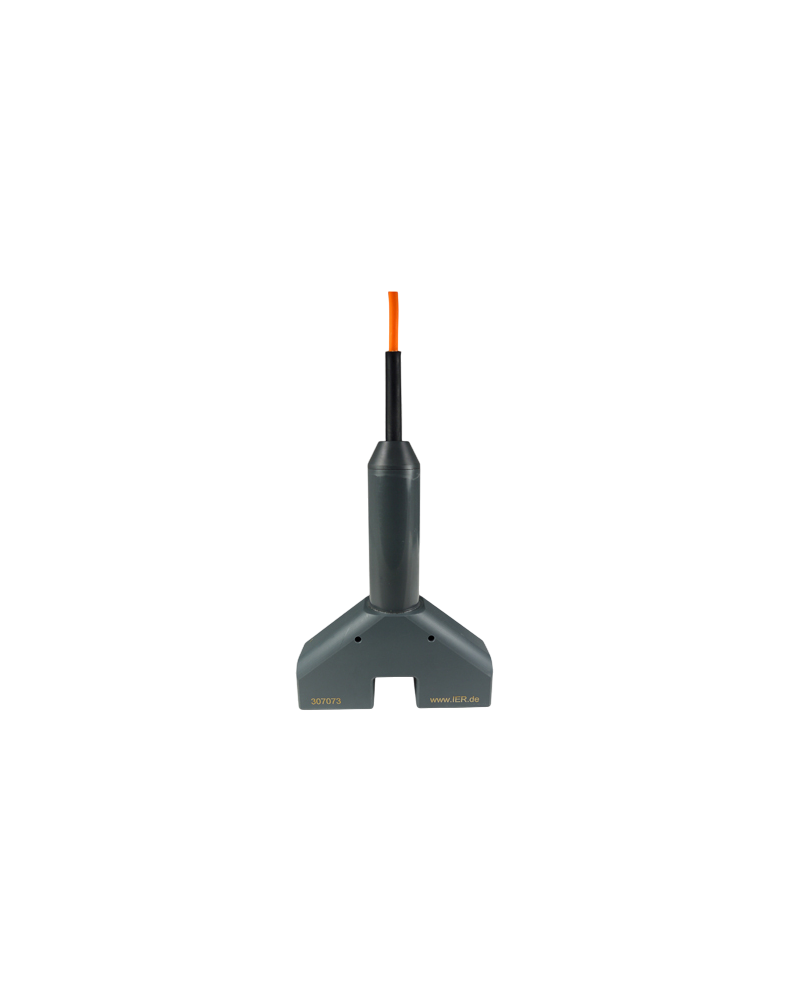


The turbidity probe is compact and designed for immersion measurement in liquids (tanks, basins, open channels).
It converts optical turbidity into an output signal, generally 4–20 mA.
The sensor operates according to the DIN / EN ISO 7027 standard, meaning it uses a pulsed infrared light (860 nm) for scattering (90°) and transmission (180°) depending on the turbidity range.
Thanks to the combination of transmitted and scattered light, the probe can automatically compensate for the effects of fouling, liquid color, or optical aging.
The turbidity probe is compact and designed for immersion measurement in liquids (tanks, basins, open channels).
It converts optical turbidity into an output signal, generally 4–20 mA.
The sensor operates according to the DIN / EN ISO 7027 standard, meaning it uses a pulsed infrared light (860 nm) for scattering (90°) and transmission (180°) depending on the turbidity range.
Thanks to the combination of transmitted and scattered light, the probe can automatically compensate for the effects of fouling, liquid color, or optical aging.
Advantages:
Compact submersible solution, suitable for many applications (wastewater treatment plants, channels, tanks)
Good accuracy within common turbidity ranges
Automatic compensation for optical contamination
Versatility with adjustable measuring ranges
Limitations:
Beyond the specified ranges, accuracy may decrease significantly
For very high turbidity or very high solid concentrations, only transmission measurement is possible — this mode has its own constraints (e.g., sensitivity to density variations)