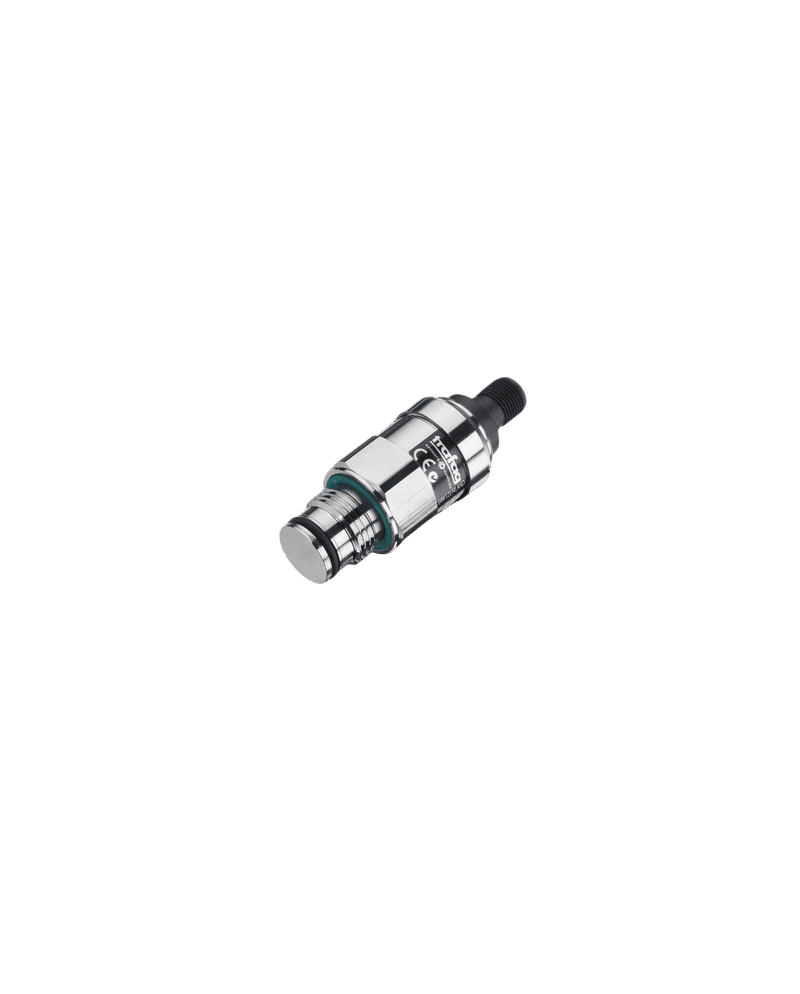

The sensor features a stainless steel membrane that deforms under the pressure of a liquid or gas.
This deformation is converted into an electrical signal using piezoresistive, capacitive, or piezoelectric technology, depending on the model.
The signal is then transmitted to a control or monitoring system.
The sensor features a stainless steel membrane that deforms under the pressure of a liquid or gas.
This deformation is converted into an electrical signal using piezoresistive, capacitive, or piezoelectric technology, depending on the model.
The signal is then transmitted to a control or monitoring system.
Stainless steel membrane (commonly AISI 316L):
Corrosion-resistant, suitable for humid or mildly aggressive environments.
Available in standard or flush versions according to needs.
Sensing element:
Integrated behind the membrane, it converts mechanical deformation into an electrical signal.
Housing:
Usually stainless steel, ensuring robustness and durability.
Mechanical connection (thread, flange) and electrical output (cable or connector).
Mechanical robustness and good corrosion resistance.
Suitable for many fluids, including water, oil, and some chemicals.
Versatile and cost-effective compared to other materials (like ceramic or titanium).
Available in hygienic versions for food and pharmaceutical applications.
Less resistant to highly aggressive media (strong acids, concentrated seawater) than titanium or some polymers.
Risk of wear or pitting in the presence of high chloride concentrations.
Aquaculture: hydrostatic pressure measurement for pond level monitoring.
Food industry: monitoring liquid flows in processing lines.
Industrial: pump, tank, and hydraulic circuit control.
Light chemical industry: non-highly corrosive fluids.