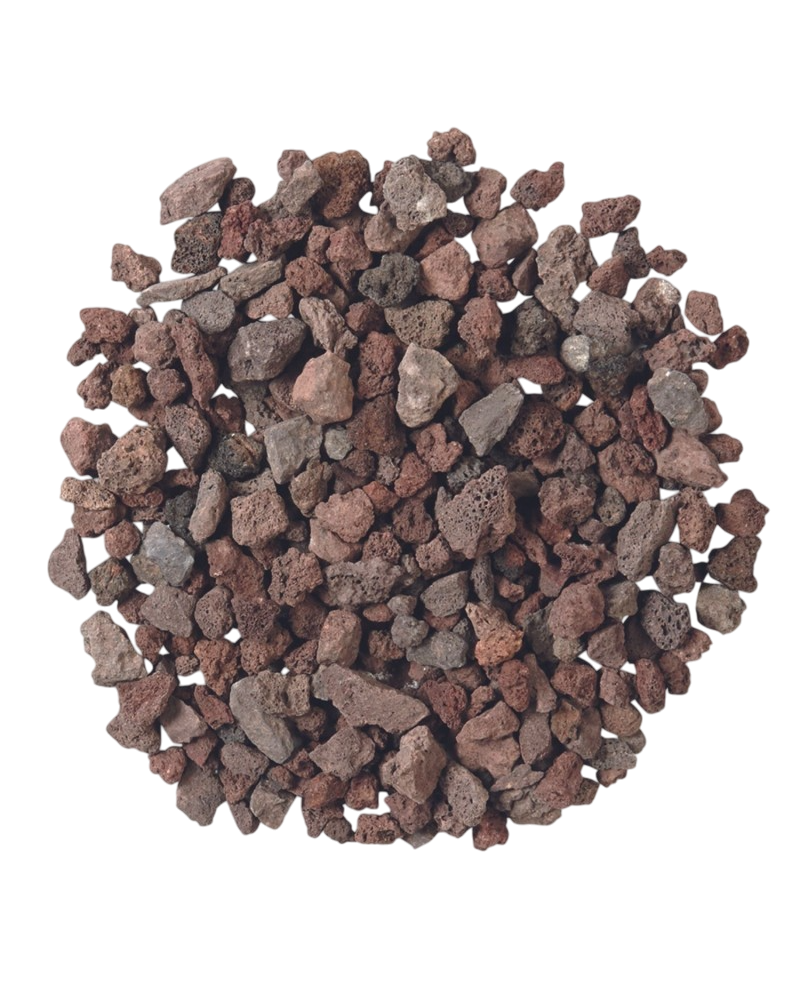


Pumice, also known as lava rock, is a natural volcanic stone that is lightweight and highly porous. It is widely used as a biological filter medium in aquaculture and aquarium filtration systems.
Pumice, also known as lava rock, is a natural volcanic stone that is lightweight and highly porous. It is widely used as a biological filter medium in aquaculture and aquarium filtration systems.
Porous structure:
Pumice has a high specific surface area (up to 300 m²/L depending on grain size), providing an excellent habitat for nitrifying bacteria (Nitrosomonas, Nitrobacter, etc.), which ensure the biological breakdown of ammonia and nitrites.
Low density:
About 0.8–1.0 kg/L, making it easy to use in trickling filters, submerged biofilters, or fixed-bed systems.
High durability:
It is a chemically inert and stable material, releasing no harmful substances into the water.
Biological filtration:
Used in trickling filters, percolating filters, or submerged biofilters.
Can be combined with other filter media such as plastic beads, gravel, or foams.
Complementary mechanical filtration:
Captures coarse particles upstream of biological treatment.
Often used as a prefilter before sand or biological filters.
Bacterial support in recirculating systems (RAS):
Common in Recirculating Aquaculture Systems for nitrification.
Also suitable for planted aquarium filters, settling tanks, and pressurized filters.
Excellent bacterial colonization capacity.
Lower cost compared to synthetic media.
Long lifespan (>10 years).
Eco-friendly and naturally available material.
Can clog if water contains too many suspended solids (good prefiltration is required).
Slight pH variation may occur initially (rinse before use).
Heavier than plastic media in fluidized filters.