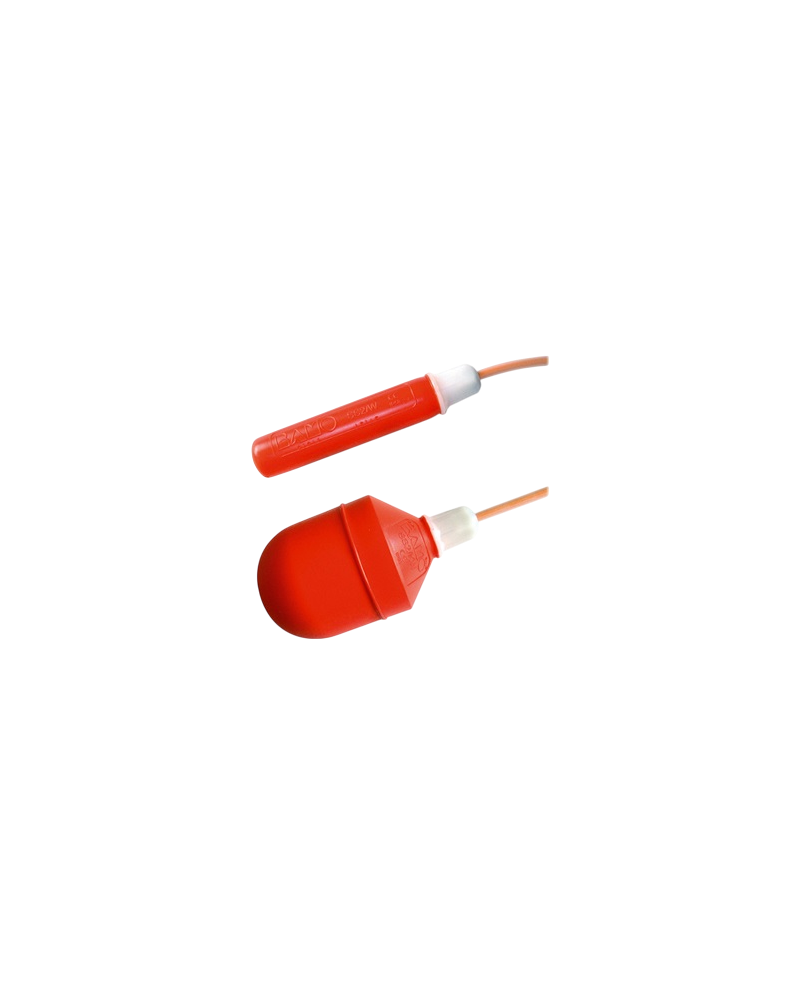
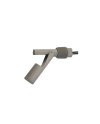
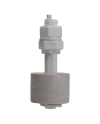

Float Level Sensor
A simple device using a float that follows the water level and activates an electrical contact at a set threshold. Economical, robust, and ideal for detecting high or low levels and automatically controlling pumps or valves.
Float Level Sensor
A simple device using a float that follows the water level and activates an electrical contact at a set threshold. Economical, robust, and ideal for detecting high or low levels and automatically controlling pumps or valves.
A float (usually plastic or stainless steel) rests on the water surface or follows its movement.
When the water level rises or falls, the float activates an electrical contact (switch, reed switch, or magnet).
This signal allows the detection of a threshold level (high, low, or intermediate).
Type: single point (one switching level) or multiple points (several detection levels).
Materials: plastic (PVC, PP) for freshwater, stainless steel for seawater or corrosive environments.
Mounting: vertical (in a tube) or horizontal (fixed to a tank wall).
Output: dry contact (ON/OFF), sometimes connectable to a PLC or alarm system.
Power supply: most do not require power as they work as passive switches.
Robust and economical: no complex electronic components.
Ideal for safety: prevents overflow or low water levels.
Easy to install: little affected by bubbles, foam, or turbulence.
Can be used to automatically control a pump or valve.