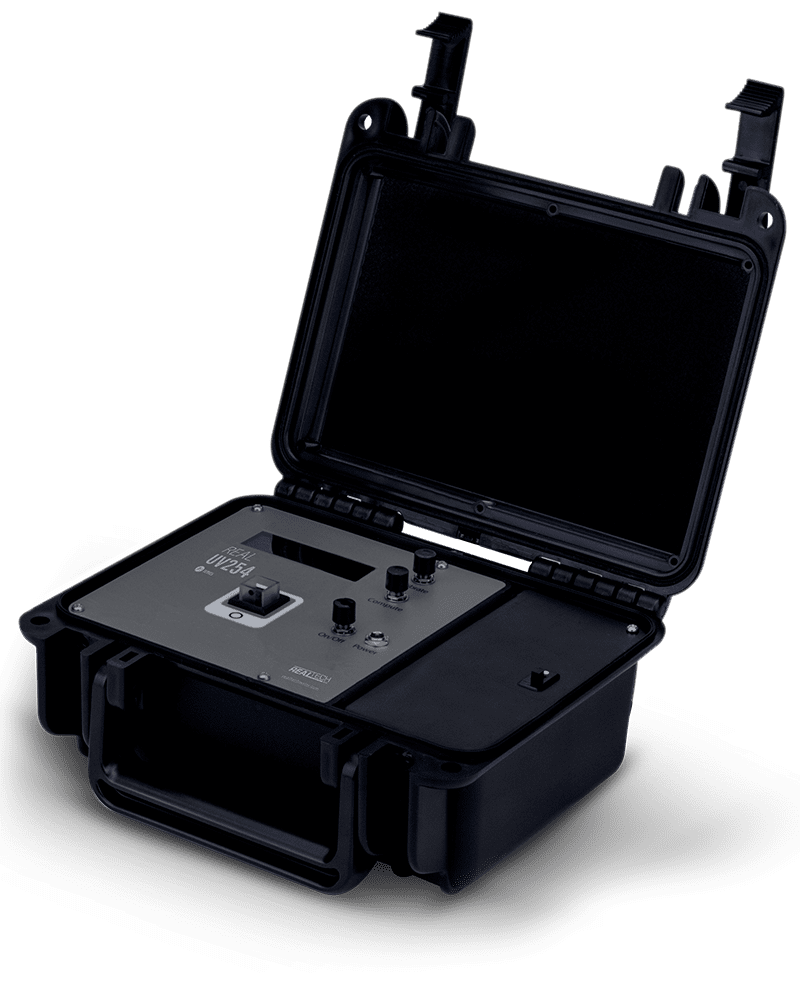
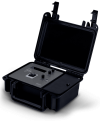

A UV transmittance measuring device in water is an instrument used to determine the amount of ultraviolet (UV) light that passes through a water sample. UV transmittance corresponds to the percentage of UV radiation that is neither absorbed nor scattered by the water, which helps evaluate the optical quality of the water, including the presence of organic substances or contaminants.
A UV transmittance measuring device in water is an instrument used to determine the amount of ultraviolet (UV) light that passes through a water sample. UV transmittance corresponds to the percentage of UV radiation that is neither absorbed nor scattered by the water, which helps evaluate the optical quality of the water, including the presence of organic substances or contaminants.
Working principle:
The device emits a UV light beam at a specific wavelength (often around 254 nm, which is sensitive to organic matter). This beam passes through a cell containing the water sample. A detector positioned opposite the light source measures the intensity of the transmitted light. By comparing the light intensity before and after passing through the water, the device calculates the UV transmittance, expressed as a percentage.
Main components:
- UV source: discharge lamp or LED emitting ultraviolet light.
- Sample cell: containing the water to be analyzed, usually made of quartz or UV-transparent material.
- UV detector: photodiode or photomultiplier sensitive to UV light.
- Electronic system: converts the light signal into digital data.
- Display or interface: shows the measurement results and allows configuration.
Applications:
- Water quality control for drinking or industrial water.
- Monitoring UV treatment in water treatment plants.
- Environmental analysis of rivers, lakes, or surface waters.