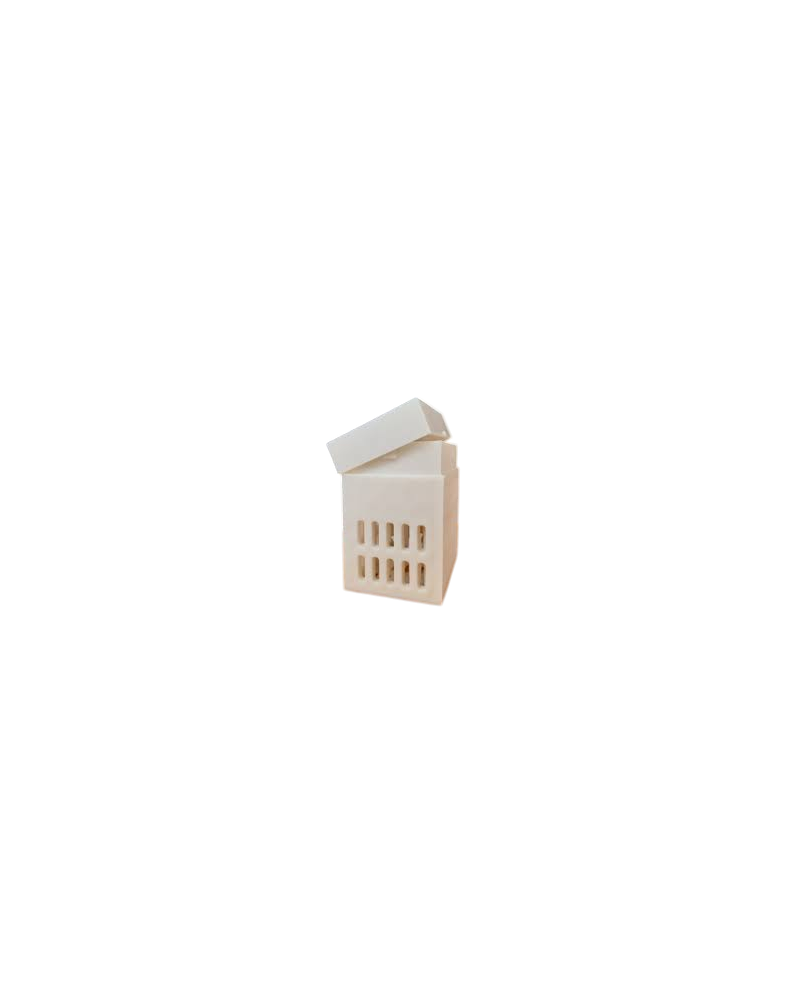



The Vibert Box, also known as the Whitlock-Vibert Box, is an incubation device designed for restocking salmonid populations, particularly trout and salmon.
Invented in 1949 by Dr. Richard Vibert, this innovative method aims to improve the survival rate of eggs in natural environments.
The Vibert Box is a small rectangular enclosure, usually made of biodegradable plastic, consisting of two chambers:
Incubation chamber: located at the top, it holds the fertilized eggs.
Nursery chamber: located at the bottom, it shelters the fry after hatching.
Once the eggs hatch, the fry drop into the lower chamber through narrow slits, where they remain protected until their yolk sac is fully absorbed. They can then exit through side openings to join the natural environment.
The Vibert Box, also known as the Whitlock-Vibert Box, is an incubation device designed for restocking salmonid populations, particularly trout and salmon.
Invented in 1949 by Dr. Richard Vibert, this innovative method aims to improve the survival rate of eggs in natural environments.
The Vibert Box is a small rectangular enclosure, usually made of biodegradable plastic, consisting of two chambers:
Incubation chamber: located at the top, it holds the fertilized eggs.
Nursery chamber: located at the bottom, it shelters the fry after hatching.
Once the eggs hatch, the fry drop into the lower chamber through narrow slits, where they remain protected until their yolk sac is fully absorbed. They can then exit through side openings to join the natural environment.
Box for incubating salmonid eggs in natural running waters, ideal for incubating small quantities of eggs in natural conditions (spawning grounds) while providing protection from predators until the fry emerge and limited impact on the environment.
| Models | Reference | Name | Capacity | Matérials | Lenght - Width - Height | Weight |
| 1 | C0040100 | NATUR-I | 7.500 | Stainless Steel | 1000 - 205 - 135 | 13.2 kg |
| 2 | C0040200 | NATUR-II (vibert) | 1.000 |
Biodegradable materials
|
70 - 63 - 45 | 50 g |
Environmentally friendly: biodegradable materials minimize ecological impact.
Enhanced protection: fry are protected from predators until independent.
Adaptability: can be used in various watercourses, including rivers and streams.
The Vibert Box is used in conservation, restocking, and aquaculture research programs. It is especially effective in natural habitats with optimal spawning conditions. Studies have shown this method can achieve a 95% hatching rate, compared to about 18% for eggs placed directly in the riverbed